
- UK expertise in rail, transit-oriented development (TOD) and digital infrastructure supports Vietnam’s sustainable urban growth.
- High-level collaboration between UK companies and Vietnamese authorities strengthens integrated transport planning.
- The UK Rail Mission reinforces the UK-Vietnam Comprehensive Strategic Partnership and shared climate and infrastructure goals.
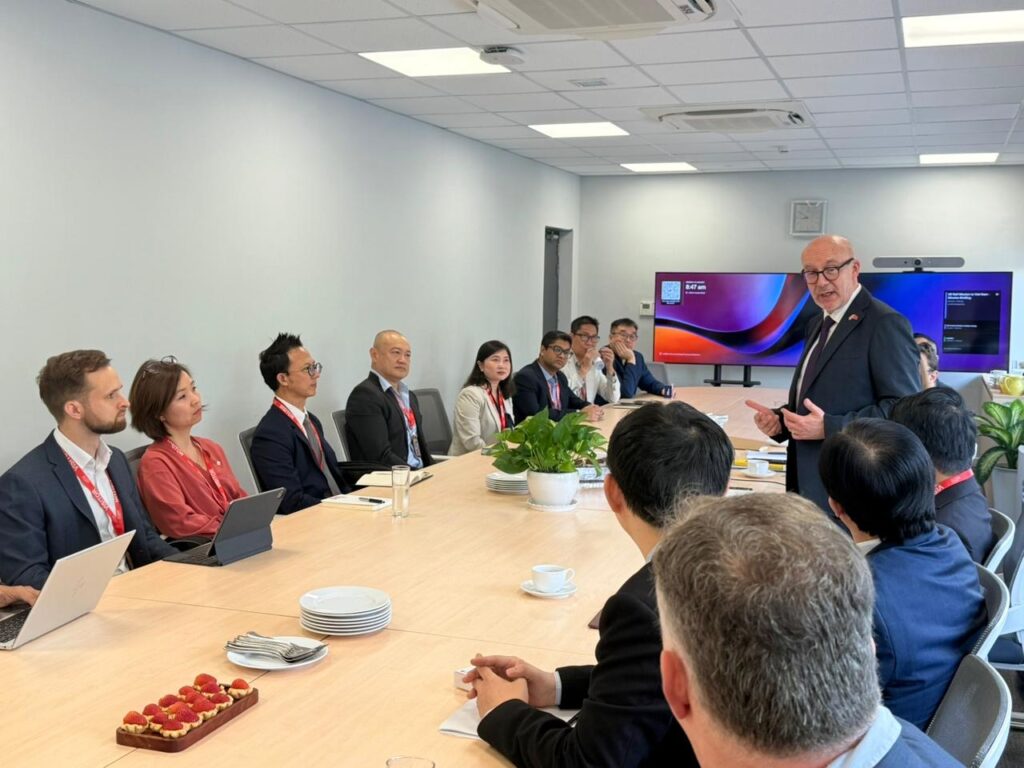
Discussing transit-oriented development during a meeting at the British Consulate General.
From 19 to 23 January 2026, the British Embassy in Hanoi and the British Consulate General in Ho Chi Minh City, through the Green Cities, Infrastructure and Energy Programme (GCIEP), successfully delivered a UK Rail Mission to Vietnam. The delegation included leading UK companies specialising in railways, TOD and building information modelling (BIM), and was led by Matt Western MP, the UK Trade Envoy to Vietnam, Thailand, Laos and Cambodia.
Vietnam has set the ambition of becoming a high-income country by 2045, with Hanoi and Ho Chi Minh City at the forefront of sustainable infrastructure development. Expanding the national railway network and urban rail systems is a key part of this vision. TOD and BIM are central to integrated urban planning, supporting modern, low-carbon infrastructure, improving mobility and enhancing access to public transport for citizens.
During the mission, UK delegates held high-level meetings with the Ministry of Construction, the Hanoi Metropolitan Railway Management Board (MRB), the Ho Chi Minh City Urban Railway Management Board, and private sector partners. These discussions focused on sharing UK expertise, exploring collaboration opportunities and promoting innovative solutions for Vietnam’s urban transport and development projects.
The mission also witnessed the signing of a memorandum of understanding between the Institute of Construction Economics (Vietnam Ministry of Construction) and the Foreign, Commonwealth and Development Office (FCDO) on establishing a Centre of Excellence for BIM in railway projects. The mission concluded with a site visit to Hanoi’s Metro Line 3.1, further highlighting the potential of TOD and the importance of integrating TOD and BIM into urban development.
A highlight of the programme was the workshop on urban rail technology and TOD models in Hanoi, exploring how the UK and Vietnam could best collaborate. UK companies presented practical experience and lessons learned from leading railway projects, offering insights into TOD implementation, digital transformation and low-carbon urban infrastructure.
Speaking at the workshop, Mr Matt Western MP said:
“Vietnam is at a pivotal moment in its infrastructure development journey. Rail and TOD are not just about moving people – they are about shaping cities, reducing congestion, improving air quality and creating vibrant communities. The UK is proud to support Vietnam through GCIEP, reflecting our shared commitment to delivering world-class infrastructure while advancing climate and sustainability goals.”
Mr Nguyen Cao Minh, General Director of MRB, added:
“MRB highly values the UK Government’s support through GCIEP. The UK’s extensive experience in integrating low-carbon development solutions, managing complex projects, and particularly its BIM standards and digital transformation offer valuable lessons for us.”
The rail mission and workshop underline the UK’s role as a trusted partner in Vietnam’s railway, TOD and digital infrastructure development. They further strengthen UK-Vietnam cooperation in line with the Comprehensive Strategic Partnership signed in October 2025 and the UK-Vietnam Action Plan 2024–2026.
The UK’s Green Cities, Infrastructure and Energy Programme is tackling climate change and extreme poverty by accelerating the delivery of sustainable green cities and climate-resilient infrastructure.
Published
27/01/26