
- Senior UK and Indonesian government and transport stakeholders were connected during a rail mission to the UK.
- Institutional knowledge was strengthened on integrated transport authorities, transport project development planning and governance.
- UK rail expertise was showcased through applied case studies, reinforcing the UK’s role as a long-term partner in sustainable mobility.
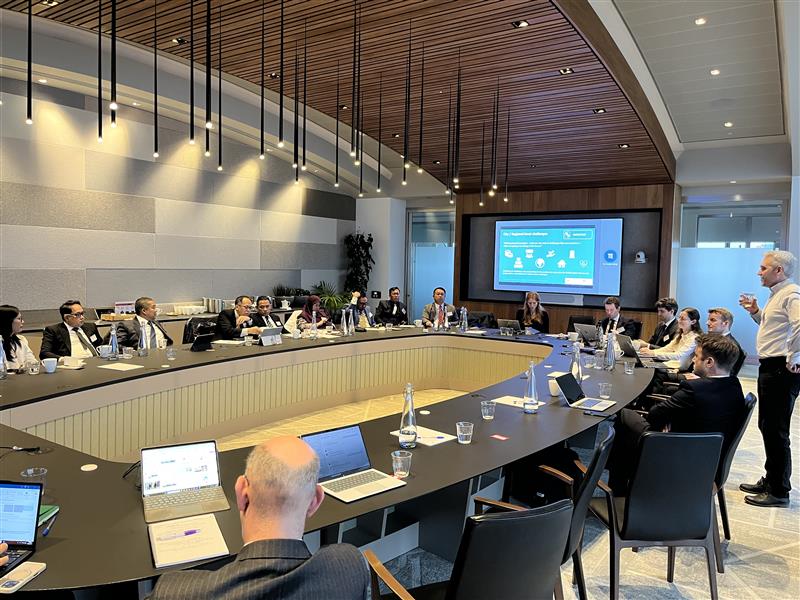
Transport for London shares lessons learned with the Government of Indonesia rail delegation on establishing an integrated transport authority.
The Government of Indonesia Rail Mission to the UK strengthened institutional capacity, senior relationships and project readiness by connecting Indonesian decision-makers with UK rail experts to advance climate-resilient and inclusive urban mobility through the UK’s Green Cities, Infrastructure and Energy Programme (GCIEP).
The mission began with a high-level welcome, followed by sessions sharing UK insights and expertise with government stakeholders. Hosted at PwC Embankment Place, the engagement brought together senior Indonesian policymakers, UK Government representatives and leading UK rail institutions to accelerate collaboration on urban and inter-urban rail development. The visit formed part of a joint Foreign, Commonwealth and Development Office (FCDO) and Department of Business and Trade mission, coordinated by the British Embassy Jakarta. It built on UK support for the design of an integrated transport authority in East Java Province, as well as the Surabaya Urban Railway Feasibility Study under GCIEP, designed to deepen strategic engagement on sustainable rail development.
The engagements focused on practical knowledge exchange and senior-level dialogue to support the enabling environment for climate-resilient and inclusive infrastructure services. Capacity-building and knowledge-sharing sessions led by GCIEP Delivery Partners, Transport for London (TfL) and Crossrail International (CI) drew on globally recognised UK experience.
TfL shared lessons on integrated transport authorities, governance arrangements, subsidies and working relationships between city and national government. CI provided insights on project development planning, governance structures, funding and financing, presenting London’s Elizabeth line as a case study. These sessions responded directly to questions from the Indonesian delegation and supported more informed decision-making on future rail investments.
The mission raised the profile of GCIEP among key Indonesian stakeholders while facilitating direct conversations between senior UK representatives and Indonesian government leaders, including officials from Bappenas, the Ministry of Transportation, East Java Province and Surabaya City. By convening all critical actors in one forum, the mission strengthened alignment and shared understanding of priorities across policy, planning and delivery. It also demonstrated UK leadership in rail policy, institutional capability and major project delivery, reinforcing the UK offer through GCIEP.
CI and TfL also hosted the mission delegates on a tour of the Elizabeth line and key stations, including Stratford, Canary Wharf and Tottenham Court Road, showcasing integration with a wide range of public transport modes and demonstrating how transit-oriented development contributed to the success of the railway.
Overall, GCIEP-supported institutions strengthened technical capability and senior relationships, improving readiness for coordinated decision-making on Indonesia’s rail investment priorities. The mission laid the foundations for continued collaboration and follow-on engagement to progress climate-resilient and integrated rail delivery.
The UK’s Green Cities, Infrastructure and Energy Programme is tackling climate change and extreme poverty by accelerating the delivery of sustainable green cities and climate-resilient infrastructure.
Published
06/02/26