
- GCIEP has delivered a five-day capacity-building training workshop on road safety and traffic data collection and analysis in Kinshasa, DRC.
- The training convened key national and provincial institutions involved in road and transport infrastructure.
- The next steps focus on institutional knowledge transfer and applying learning to the three pilot intersections along Boulevard Lumumba.
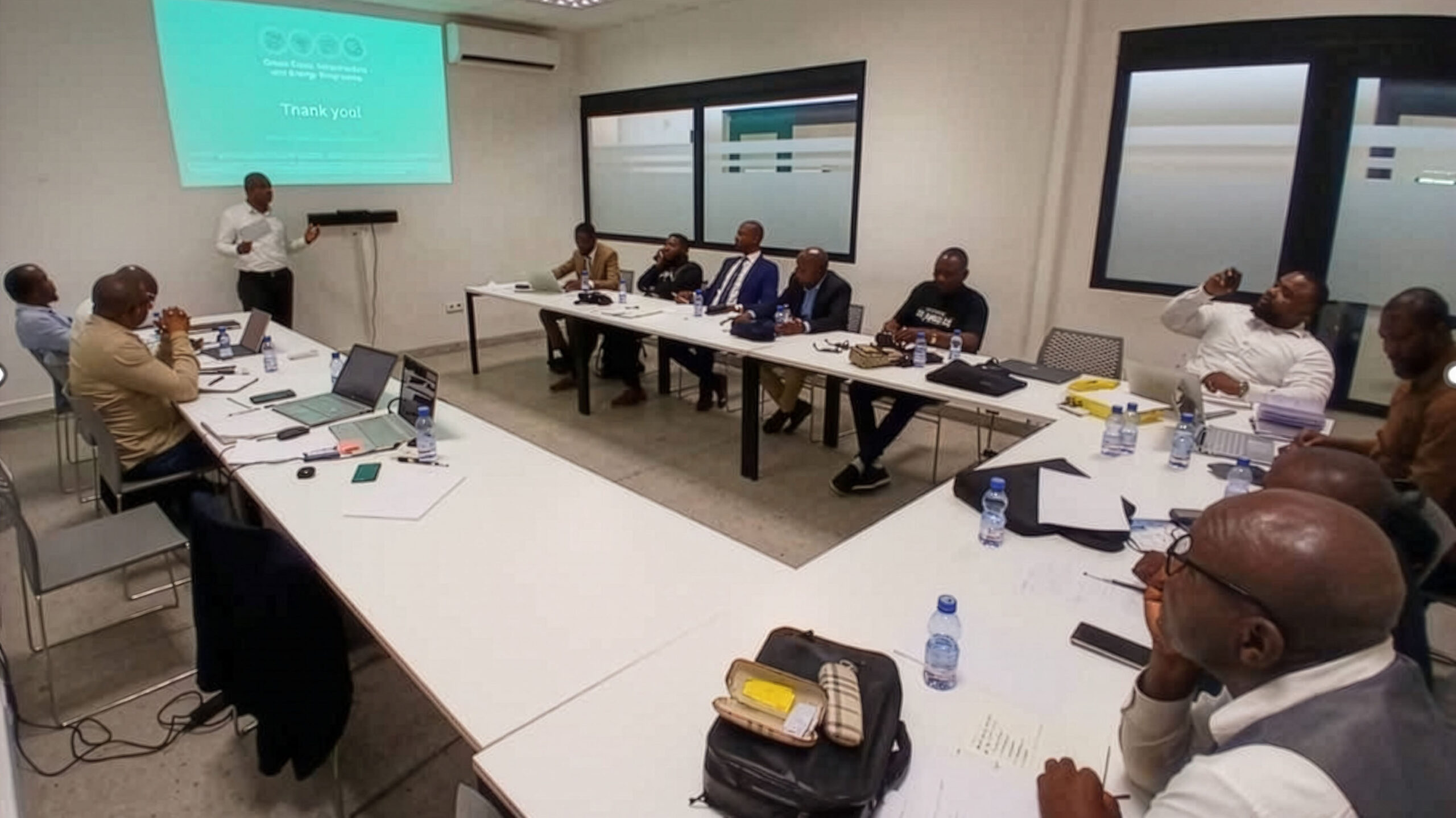
The capacity-building training focussed on road safety and traffic data collection and analysis
In an important step for strengthening road safety and traffic management in Kinshasa, the Green Cities, Infrastructure and Energy Programme (GCIEP) has delivered capacity-building training with national and provincial institutions.
As part of GCIEP’s transport and mobility pillar in the Democratic Republic of Congo (DRC), the five-day intensive training aimed to strengthen technical capacity in road safety and traffic data collection and analysis.
Kinshasa, a rapidly growing megacity of over 17 million people, faces severe infrastructure challenges. Rapid urban expansion has outpaced the city’s capacity to deliver basic services – resulting in issues such as severe traffic congestion and collapsed drainage systems.
Of particular concern, institutions responsible for planning and constructing transport infrastructure face significant capacity gaps in road safety. Specifically, limited road markings and signage, insufficient public lighting, illegal occupation of sidewalks by vendors and inadequate consideration for persons with reduced mobility all contribute to high-risk road environments. In parallel, weak and fragmented traffic and accident data systems constrain effective planning and traffic management.
In response to these considerable challenges, the GCIEP-delivered training brought together key national and provincial stakeholders, including the CNPR (National Road Prevention Commission), GET (Transport Studies Group), CDUK (Kinshasa Urban Development Unit), relevant provincial ministries, the Office des Routes (Roads Office), OVD (Office of Roads and Drainage), the Traffic Police, ACGT (Congolese Agency for Major Works) and ANAT (National Agency for Land Use Planning).
The training focused on a number of key outcomes, aiming to:
- Equip participants with the fundamentals of road safety
- Support risk analysis along the major urban corridor road of Boulevard Lumumba
- Improve protection for vulnerable road users
- Strengthen traffic data collection systems (vehicle counts, accident data, traffic flows)
- Enable evidence-based technical decision-making.
Participants analysed safety challenges at the three pilot intersections of Bd Lumumba – Kimbuta, Quartier I and Debonhomme. They identified key risks including conflicts between pedestrians, motorcycles and vehicles, lack of adequate signage, unmanaged roadside activities, limited integration of vulnerable user needs, and insufficient monitoring of air quality.
This activity directly supports GCIEP’s objective to improve road safety and ease traffic flow at these strategic intersections. It establishes the foundations for a data-driven, safer and more inclusive approach to urban mobility planning.
The emphasis on protecting vulnerable road users, including pedestrians, women, children and persons with disabilities represents a critical step toward more equitable mobility systems. At the same time, improved traffic management and better data contribute to reduced congestion and associated emissions.
To ensure a lasting impact, participating institutions will now cascade this newly acquired knowledge internally and embed it into the planning and execution of the pilot interventions. By translating these data-driven strategies into concrete actions at the Kimbuta, Quartier I and Debonhomme intersections, GCIEP and its partners aim to transform the Boulevard Lumumba corridor into a safer, more efficient and highly inclusive model for urban mobility in Kinshasa.
The UK’s Green Cities, Infrastructure and Energy Programme is tackling climate change and extreme poverty by accelerating the delivery of sustainable green cities and climate-resilient infrastructure.
Published
10/03/26