
- GCIEP has convened a national validation workshop to test and refine Sierra Leone’s first solar‑plus‑storage Power Purchase Agreement (PPA) framework.
- It brought together key ministries and institutions across the power sector to discuss how future projects should be prepared, contracted and managed.
- Feedback directly shaped the final set of practical tools, which will ultimately support a more reliable electricity network.
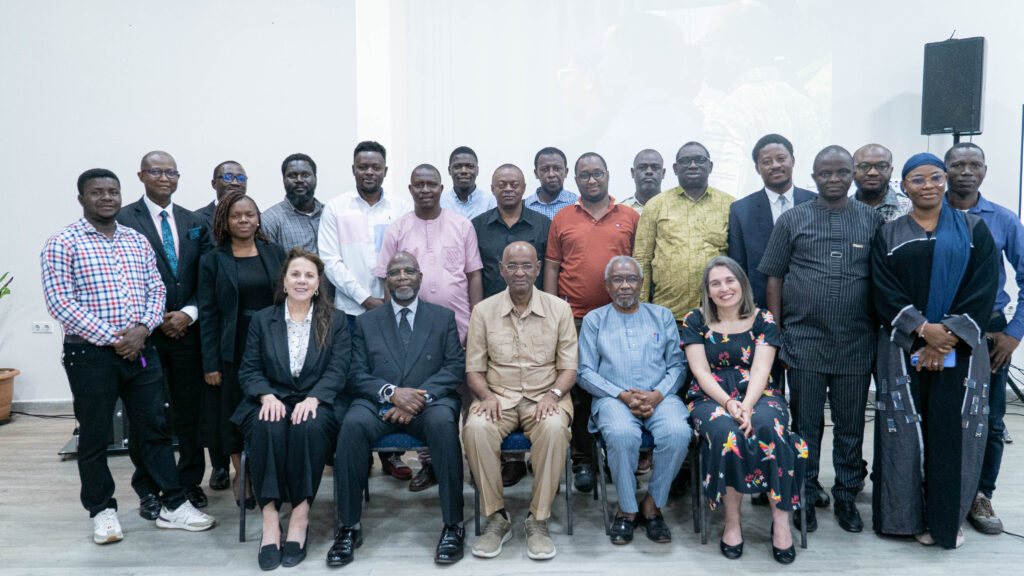
Representatives from key ministries and institutions across the power sector came together with the GCIEP team
A two‑day validation workshop to test and refine Sierra Leone’s first solar‑plus‑storage Power Purchase Agreement (PPA) framework was convened recently by the Government of Sierra Leone and the Green Cities, Infrastructure and Energy Programme (GCIEP).
Sierra Leone is entering a new phase in its power sector development. As the country prepares for a growing pipeline of renewable energy investments, the need for a practical and well‑structured approach to procuring and managing solar‑plus‑battery energy storage system (BESS) projects has become increasingly important.
Battery storage is increasingly appearing in project proposals. However, the rules for how it should operate, how it should be contracted and how it should be integrated into day‑to‑day system operations are still taking shape. To support this transition, GCIEP worked with the Government to convene a two‑day validation workshop to test and refine the country’s first solar‑plus‑storage PPA framework.
The workshop brought together representatives from the Ministry of Energy, the Electricity Generation and Transmission Company (EGTC), the Electricity Distribution and Supply Authority (EDSA), the Energy and Water Regulatory Commission (EWRC), the Ministry of Finance, the Ministry of Justice, the National Investment Board and the Attorney General’s Office. This broad participation allowed the framework to be reviewed from technical, commercial, legal and policy perspectives. Sierra Leone’s power system has its own characteristics and constraints, and the workshop was designed to ensure that the new framework reflects national priorities and practical realities.
Building a shared understanding
The first day of the workshop focused on building a shared understanding of what battery energy storage can contribute to Sierra Leone’s grid. Participants explored four key roles that storage can play when paired with solar power:
- Helping stabilise grid frequency
- Providing short‑term backup during sudden changes in supply or demand
- Minimising disruption when there are rapid changes in solar output caused by cloud cover
- Shifting solar energy into the evening when demand is higher
These discussions highlighted how storage can serve as a flexible tool to strengthen reliability, support renewable integration and help the system respond more effectively to changing conditions.
The second and final day explored how solar‑plus‑storage projects can be contracted. The attendees discussed how PPAs and implementation agreements (IAs) work together, and why solar photovoltaic (PV) generation and battery storage need to be treated differently in commercial terms. Participants also explored approaches that would allow developers to be rewarded fairly for both technologies, while giving the system operator flexibility to use the battery to support grid stability when needed.
The workshop also linked the contracting framework to the practical realities of operating the power system by reviewing procurement, system operation and contract management processes in an integrated way, rather than in isolation. The role of gender equality, disability and social inclusion measures, such as fair labour standards, grievance processes and accessibility, in strengthening wider procurement processes also formed part of the discussions.
A future‑ready electricity sector
In his closing address, Deputy Minister Jalloh of the Ministry of Energy shared that “the workshop has reaffirmed the need to strengthen institutional arrangements and move toward a consistent national approach for solar‑plus‑storage procurement and contract management.” This reflects the broader ambition to build a coordinated, fit-for-purpose and future‑ready electricity sector.
Feedback from the workshop was used by the GCIEP team to finalise and share a set of practical, technically grounded tools including contract templates and guidance materials. These will support future negotiations and project implementation and help guide authorities as the country moves towards a more reliable, renewable-integrated power system.
The UK’s Green Cities, Infrastructure and Energy Programme is tackling climate change and extreme poverty by accelerating the delivery of sustainable green cities and climate-resilient infrastructure.
Published
30/03/26