
- At the UNFCCC COP30 climate conference in Brazil, the Government of Mozambique launched its first National Climate Finance Strategy, developed in partnership with GCIEP.
- Mozambique’s president hailed it as “a decisive step towards a more resilient economic model capable of responding to climate change”.
- It was also announced that Mozambique has US$ 40 million available under the national allocation of the Adaptation Fund to support the implementation of the strategy.
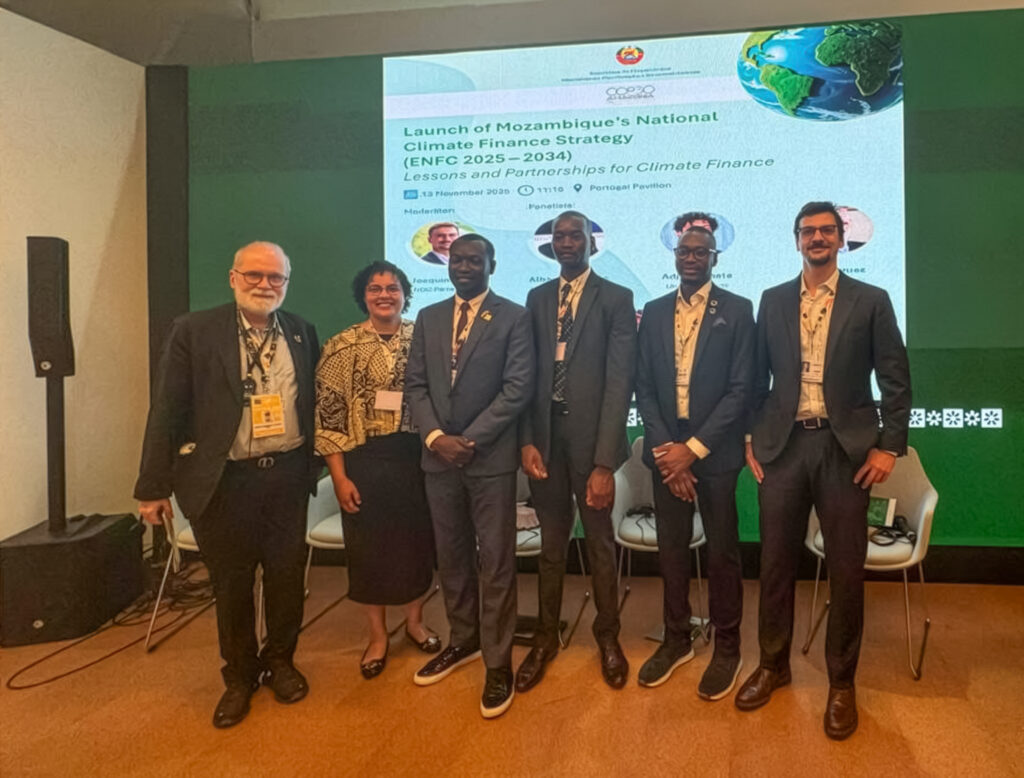
At the international UNFCCC COP30 climate conference in Brazil on 13 November, Mozambique launched its first ever National Climate Finance Strategy, alongside global and African leaders.
The launch came at a session on partnerships for climate finance, where the President of the Republic of Mozambique, His Excellency Daniel Francisco Chapo, commented:
"The strategy proposes concrete solutions to increase access to climate finance to promote sustainable practices and strengthen the financial system. It represents a decisive step towards a more resilient economic model capable of responding to the challenges of climate change and ensuring and ensuring opportunities for future generations."
To achieve climate resilience by 2030, Mozambique will need to unlock around $US 37.2 billion in investment. As part of its work with Mozambique to scale finance for low-carbon, climate-resilient infrastructure, the Green Cities, Infrastructure and Energy Programme (GCIEP) provided direct technical assistance to the Climate Finance Unit (CFU) within the Ministry of Planning and Development to develop the strategy.
This involved extensive consultations during the drafting process to ensure broad stakeholder ownership of the strategy, culminating in the strategy’s formal approval on 16 October, 2025.
The international launch of the strategy at COP30 took place alongside leaders from several African countries, development partners, private-sector actors and regional experts in climate finance.
It was also announced that Mozambique currently has US$40 million available under the national allocation of the Adaptation Fund which can support the implementation of several initiatives presented in the Strategy. Mozambique’s National Director of Climate Finance, Albano Manjate, presented the pillars guiding the strategy of 2025 to 2034.
It was noted that the success of the strategy will depend on localised implementation, ensuring that the it reflects the social, cultural and environmental diversity of Mozambique. GCIEP is now working with the Government of Mozambique and CFU to implement and operationalise the strategy, moving it from policy to action and securing a resilient future for its citizens.
The UK’s Green Cities, Infrastructure and Energy Programme is tackling climate change and extreme poverty by accelerating the delivery of sustainable green cities and climate-resilient infrastructure.
Published
20/11/25