
- The Hanoi People’s Council has approved Resolution 71, establishing a critical legal framework for transit-oriented development (TOD).
- The policy creates a clear regulatory basis to coordinate transport and urban planning, accelerating the capital’s metro network expansion.
- GCIEP worked closely with the Hanoi Metropolitan Railway Management Board (MRB) to refine the legislation.
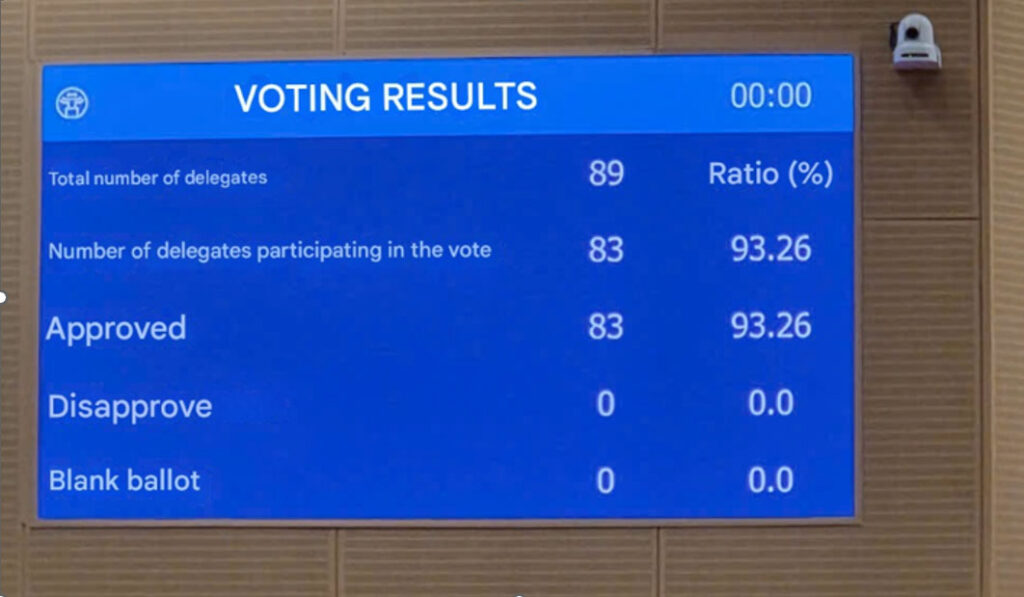
Resolution 71 was unanimously passed by the Hanoi People’s Council paving the way for TOD
Hanoi is moving forward with ambitious plans for sustainable and inclusive urban transport and infrastructure – following the approval of Resolution 71 at the end of 2025.
Developed with technical support from the Green Cities, Infrastructure and Energy Programme (GCIEP), this landmark policy establishes the city’s first comprehensive legal framework for transit-oriented development (TOD) – concentrating housing, jobs and services around public transport hubs
The resolution addresses longstanding challenges in the capital, where fragmented planning has historically slowed infrastructure delivery. With Hanoi aiming to complete its major metro network by 2035, Resolution 71 provides the essential “rulebook” to integrate land use with transport planning. By clarifying the boundaries for TOD zones, the resolution paves the way for the city to capture the economic value of new metro lines and reinvest it into social infrastructure.
Since September 2024, GCIEP experts have worked alongside the Hanoi Metropolitan Railway Management Board (MRB), providing technical inputs that shaped the resolution from an initial outline into robust legislation. This success mirrors similar progress in the south, where GCIEP supported Ho Chi Minh City to pass its own TOD framework (Resolution 38) earlier in the year. Together, these resolutions ensure that Vietnam’s two economic engines are now equipped with the legal tools to drive low-carbon, resilient urban growth.
Luu Trung Dzung, Deputy General Director of the Hanoi MRB, welcomed the outcome:
“This is an important milestone in the process of institutionalising TOD principles into Hanoi’s urban development strategy. MRB acknowledges and highly appreciates the practical, flexible, timely and high-quality support of GCIEP experts who have accompanied MRB since the early stages of learning, studying and developing TOD-related policies.”
Looking ahead, GCIEP will continue its collaboration with the MRB, shifting focus from policy design to implementation. This includes further technical advice on financial mechanisms and capacity building to ensure the new framework translates into tangible, high-quality projects for the citizens of Hanoi.
The UK’s Green Cities, Infrastructure and Energy Programme is tackling climate change and extreme poverty by accelerating the delivery of sustainable green cities and climate-resilient infrastructure
Published
17/02/26