
- Development Bank Ghana (DBG) has been presented with a concept note for a Climate Finance Facility (CFF) designed to strengthen the pipeline of bankable, investment-ready projects.
- Convened by GCIEP, the hand-over event gathered senior representatives from the UK FCDO and DBG, positioning the latter as an anchor for climate finance.
- Next steps will focus on incorporating feedback, refining the concept note and engaging partners to move the facility towards implementation.
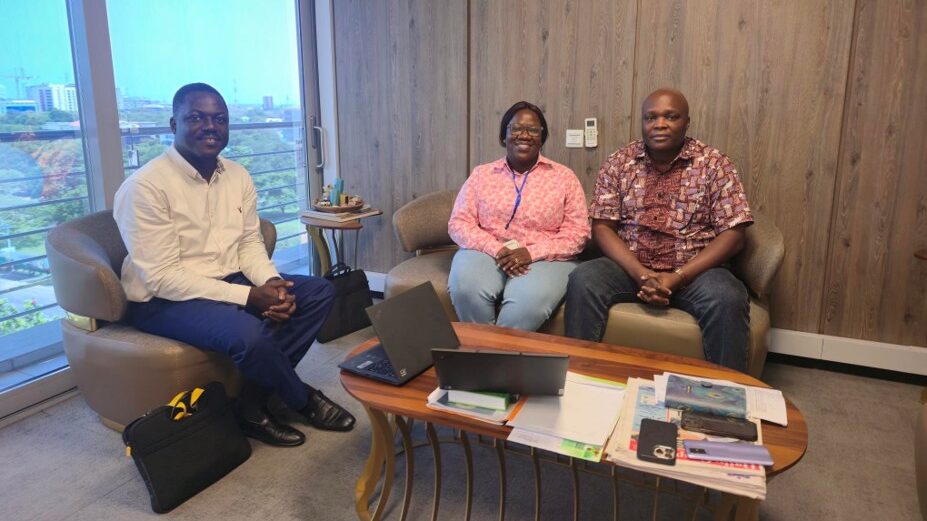
Members of DBG's leadership gather to discuss the Bank’s bold vision to transform Ghana’s green finance sector
In a milestone for sustainable and inclusive infrastructure in the country, Development Bank Ghana (DBG) has been presented with a concept note for a Climate Finance Facility (CFF), developed in partnership with the Green Cities, Infrastructure and Energy Programme (GCIEP).
While Ghana has a growing base of climate-relevant opportunities across sectors such as renewable energy, transport and industrial decarbonisation, many of these projects remain stalled at early stages due to limited project preparation capacity. By identifying and structuring these opportunities, the CFF strengthens the pipeline of climate-aligned, investment-ready projects and encourages public-private collaboration in infrastructure delivery.
The CFF hand-over event was attended by senior representatives from DBG and the UK Foreign, Commonwealth & Development Office (FCDO), and explored DBG’s potential role as an anchor for climate finance. It introduced a blended financing approach for the CFF, combining lending, investment and technical support. The meeting highlighted that getting the structure and execution right will be just as important as mobilising capital, particularly to ensure the facility is commercially viable and able to attract investment.
Attending the event, Michael Mensah-Baah, Deputy CEO & Head of Investments at DBG, hailed the CFF concept as “a very critical value addition to the country” adding that the team was "excited to deliver this goal".
Freda Adjoa Oforiwa Mantey, Head of ESG Climate Finance and Sustainability at DBG, added: “Renewable energy, waste management, and now, electric vehicles are something that most of the banks are catching up to. Hence, this CFF is perfect to satisfy and call interest from those sectors.”
The session helped clarify DBG’s role in shaping Ghana’s climate finance landscape and brought a more practical focus to how the facility could be structured and delivered. It also advances GCIEP’s broader objectives around mobilising climate finance and linking finance to project development through the CFF and Project Preparation Facility.
This impact extends beyond project sponsors, with communities on standby to benefit from improved access to clean energy, sustainable transport and climate-resilient infrastructure – alongside youth job creation and new skills development in emerging green sectors. The facility also creates an opportunity to better integrate inclusion, ensuring benefits are more widely shared, while strengthening projects’ alignment with international climate finance and environmental standards.
Charlotte Beck, FCDO Infrastructure & Climate Finance Advisor, welcomed the intervention and credited the GCIEP and DBG team, adding that she looked forward to seeing future progress in the area.
Indeed, next steps will focus on incorporating DBG’s feedback, refining the concept note, and aligning on the way forward. This includes engaging Participating Financial Institutions (PFIs) and potential funding partners, strengthening the risk-sharing approach and developing a clear plan for how the facility will be operationalised.
The UK’s Green Cities, Infrastructure and Energy Programme is tackling climate change and extreme poverty by accelerating the delivery of sustainable green cities and climate-resilient infrastructure.
Published
31/03/26