
- As part of the ongoing development of the Surabaya Drainage Master Plan, GCIEP conducted a joint prioritisation workshop to gather stakeholder inputs and feedback on the initial multicriteria analysis for project prioritisation.
- The workshop was attended by representatives from local and national government departments as well as community groups.
- The insights and feedback will be incorporated into an assessment that will form the basis for a shortlist of proposed project interventions for the Sememi area.
The Green Cities, Infrastructure and Energy Programme (GCIEP) is supporting Surabaya, Indonesia’s second-largest city, to update its Sustainable Drainage Master Plan (SDMP) in response to increasing flood risks driven by climate change, rapid urbanisation and land use change.
GCIEP recently conducted a joint prioritisation workshop as part of this ongoing development of the SDMP. The main aim of this activity was to present the initial multi‑criteria analysis used for project prioritisation – known as the Physical Climate Risk Appraisal Method (PCRAM) – and obtain structured feedback from key stakeholders. The workshop served as a collaborative platform to validate assumptions, refine priority criteria and ensure that the proposed interventions reflect local needs, data availability and community realities.
By incorporating stakeholder insights into PCRAM, the GCIEP team ensures that the prioritisation of interventions aligns with the programme’s intended outcomes – improving climate resilience, promoting inclusive planning and supporting sustainable urban development. Stakeholder validation also increases the legitimacy and future uptake of proposed interventions by local institutions.
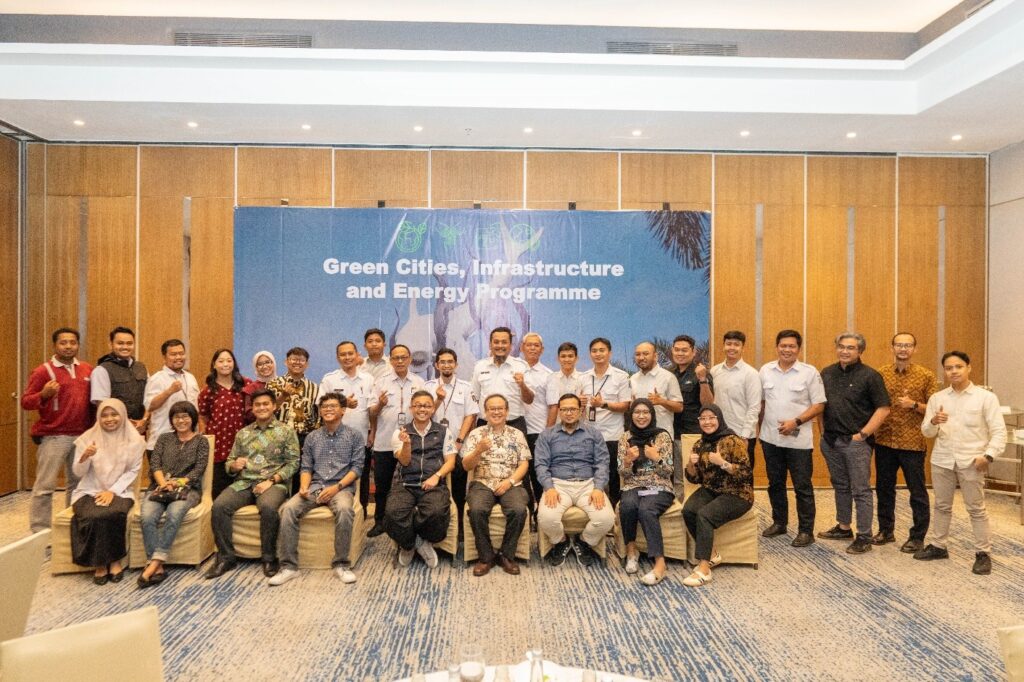
The workshop was attended by representatives from key government agencies and community groups, including the East Java Regional Development Planning Agency; the Meteorology, Climatology and Geophysical Agency; the Department of Water Resources and Highways; and the Department of Public Housing, Settlement Areas and Land Affairs; as well as members of affected communities. The participation of government bodies is significant because these institutions play central roles in city planning, disaster risk management, micro‑drainage systems, climate data provision, and housing and settlement development. Engagement at this level also builds institutional ownership, strengthens inter-agency coordination and supports long‑term alignment with city development strategies.
The PCRAM process helps identify solutions that are not only technically sound but also responsive to gender equality, disability and social inclusion considerations, and contribute to climate, nature and environment objectives. This includes identifying projects that reduce exposure to flood risks, enhance climate resilience and strengthen equitable access to basic services.
The insights gathered from the workshop will directly influence the refinement of the PCRAM assessment. This improved analysis will help GCIEP shortlist priority project interventions for the Sememi area, ensuring they reflect real-world needs, climate risks and community priorities.
Next steps include integrating the workshop feedback into the revised PCRAM model, conducting follow-up technical validations and preparing a shortlist of proposed interventions for further feasibility assessments. If subsequent capacity-building activities are planned, participant data will be appropriately disaggregated by gender, disability status and business size to strengthen inclusivity and monitoring.
The UK’s Green Cities, Infrastructure and Energy Programme is tackling climate change and extreme poverty by accelerating the delivery of sustainable green cities and climate-resilient infrastructure.
Published
27/03/26