
Victor Esubonteng, Energy Lead for GCIEP in Ghana, and Amanda Lonsdale, GCIEP Thematic Lead (Energy), provide an overview of the principles of floating solar photovoltaics and introduce GCIEP's pre-feasibility study for a strategic 200MW project at Akosombo-Sedom.
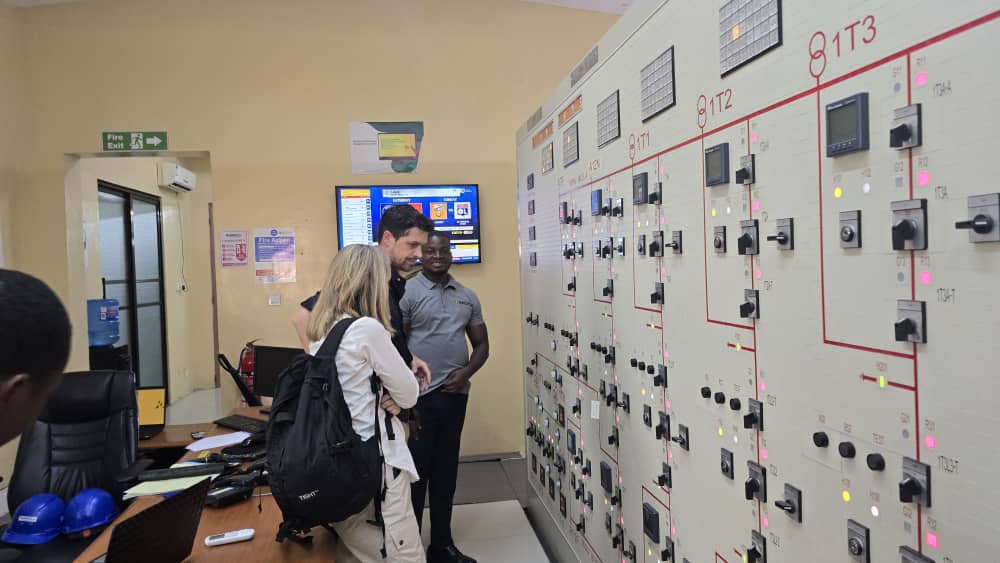
GCIEP's technical engagement also included review of grid interconnection infrastructure including the Akosombo switchyard
For decades, the iconic Akosombo Dam has been the beating heart of Ghana’s energy infrastructure. Built in the 1960s, it created Lake Volta – the largest man-made lake in the world by surface area – and helped power the nation’s industrial ambitions. Today, hydropower still accounts for roughly one-third of Ghana's electricity. However, this reliance comes with a growing climate vulnerability: increasingly erratic rainfall and severe droughts threaten reservoir levels, reducing generation capacity and heightening the risk of power outages.
Ghana aims to achieve 10% non-hydro renewable energy by 2030; but with renewables currently at only 2.5%, a massive, accelerated scale-up of investment is required.
To help close Ghana's clean energy gap, the Green Cities, Infrastructure and Energy Programme (GCIEP) is partnering with the Volta River Authority (VRA) to advance an enhanced pre-feasibility study for a strategic 200MW floating solar photovoltaic (sometimes dubbed ‘floatovoltaics’) project at Akosombo-Sedom. This project represents a flagship initiative for the VRA and demonstrates the transformative potential of hybridizing renewable energy.
Compounding benefits
Deploying floating solar on a hydroelectric reservoir creates a highly efficient hybrid system. The floating solar panels can supply electricity to the grid during peak daylight hours. This allows dam operators to conserve water during the day, holding it back to generate hydroelectricity during the evening peak or overnight. In effect, the reservoir acts as a giant ‘virtual battery’, balancing the intermittent nature of solar power with the dispatchable stability of hydro.
Floatovoltaics also offers distinct technical and environmental advantages over traditional land-based solar farms:
Enhanced efficiency: Solar panels naturally lose efficiency as they heat up. The water body acts as a natural cooling system, keeping the operating temperature of floating panels significantly lower than ground-mounted equivalents. This cooling effect can boost energy yields by 10% to 15%.
Reduced evaporation: Large reservoirs in tropical climates lose vast amounts of water to evaporation under the hot sun. Floating panels physically shade the water surface, which can reduce evaporation rates by up to 30%. At Akosombo, reducing evaporation means retaining more water that can be pushed through the turbines to generate additional hydroelectricity. Floatovoltaics also help to improve water quality by limiting algae growth.
Bypassing land constraints: Ground-mounted solar projects require significant acreage, often competing with valuable agricultural land or requiring deforestation. Floating solar entirely bypasses this issue. Furthermore, by sitting on an existing hydro facility, the 200MW project can tap directly into GRIDCo's existing high-voltage transmission networks, avoiding the massive costs and delays of building new grid infrastructure.
From theory to practice
To help bridge Ghana’s project preparation gap, GCIEP is delivering an ‘enhanced’ pre-feasibility study for the Akosombo-Sedom site that goes far beyond preliminary screening. The comprehensive scope of this intervention includes detailed technical assessments (such as solar resource and grid integration analysis), robust financial modelling, environmental and social scoping and a thorough review of legal and procurement frameworks.
Notably, as part of this project preparation, the GCIEP team conducted a multidisciplinary site assessment and on-water reconnaissance of preselected sites on Volta Lake in late 2025.
The stakeholder engagement process began with a four-day field mission to Akosombo and Akuse involving GCIEP, the technical consulting team (RSK, Multiconsult, and Lumen), VRA and GRIDCo. The objective was to assess the suitability of potential locations for the proposed 200 MW Akosombo-Sedom floating solar project while gathering baseline technical, environmental and operational information to inform the enhanced pre-feasibility study. Activities included vessel-based inspections of three potential floating solar sites, review of grid interconnection infrastructure including the Akosombo switchyard and technical discussions with VRA operational teams and GRIDCo engineers. The team also engaged institutions such as the Council for Scientific and Industrial Research (CSIR) Water Research Institute and Volta Lake transport operators to better understand hydrological conditions, navigation patterns, and operational constraints on the lake.. These visits helped validate early technical assumptions regarding water depth variability, site access, logistics, and potential environmental and social considerations that would influence project design.
Additionally, with support from the VRA’s Marine Services unit, who provided the necessary logistics and a vessel at no extra cost to the project, the team gathered early-stage bathymetric data – measuring the water depth and mapping the underwater terrain. This data is a critical prerequisite for designing secure mooring and anchoring systems for the floating platforms. Crucially, the field mission assessed how the installation might disrupt local livelihoods, gathering vital inputs regarding potential impacts on timber harvesting and fisheries on the lake.
As a result of the site assessment, to protect local biodiversity, the solar panel layout is being deliberately designed to exclude exposed shoals, ensuring that environmentally sensitive areas remain undisturbed. The visit also allowed the team to evaluate grid connection options, two of which were successfully confirmed as technically viable by GRIDCo.
Alignment with local realities
Building on this field data, GCIEP recently facilitated comprehensive technical review meetings hosted at VRA’s Engineering Department in Akuse. Bringing together senior technical staff from VRA, GRIDCo and GCIEP’s expert consultants, the sessions rigorously reviewed the technical, environmental, financial and legal components of the study. These discussions were crucial for aligning all parties on preferred sites, grid interconnection points, regulatory pathways and financial assumptions.
Additionally, engaging local government authorities early in the project preparation process helps clarify governance structures, community entry protocols and permitting pathways. This reduces the risk of delays later in the project development process and ensures that technical studies are aligned with local institutional realities.
The insights gathered are now being consolidated into a draft pre-feasibility report, setting the stage for a major co-creation and validation workshop scheduled for March 2026.
Despite the clear benefits of renewables, deployment in Ghana has stalled due to a capability gap in developing projects to bankable standards. Through the Akosombo-Sedom intervention, GCIEP is providing the specialised technical, financial and environmental expertise needed to bridge this gap. By rigorously structuring the project to meet international safeguards, GCIEP is de-risking the asset, preparing it to attract private capital and floating a blueprint for a resilient, low-carbon future in Ghana.
The UK’s Green Cities, Infrastructure and Energy Programme is tackling climate change and extreme poverty by accelerating the delivery of sustainable green cities and climate-resilient infrastructure.
Published
11/03/26