
By Windel Daumen, Country Officer – Baguio
Living with water uncertainty
If you grow up in Baguio, in the Philippines island of Luzon, you learn early that water is never something to take for granted. You notice which days the pressure is low. You know to store water before the dry season or peak tourist weekends. You learn to plan laundry and cooking around usual supply schedules. Children are reminded to use water carefully – to turn off the tap immediately, to reuse water for cleaning floors, or to avoid wasting it while washing dishes.
When the water finally flows, people rush to open valves and fill every container they have – drums, pails, storage tanks – because no one knows exactly how long it will last. Because of this, large water tanks on rooftops or beside houses have become a common sight across the city. Even these water tanks are sometimes not enough. Many families still rely on water delivery trucks, especially in areas where piped connections are limited or unreliable. It is common to see people waiting with hoses or containers as delivery tanks arrive.
During the summer months, when natural sources become strained and demand increases, water shortages become even more noticeable. At these times, the price of delivered water often goes up, sometimes reaching up to 100 pesos per drum, which can be difficult to afford for households already struggling to manage their expenses.
For many families, these routines – saving water, storing it whenever it flows, waiting for deliveries and buying drinking water – are simply part of everyday life.
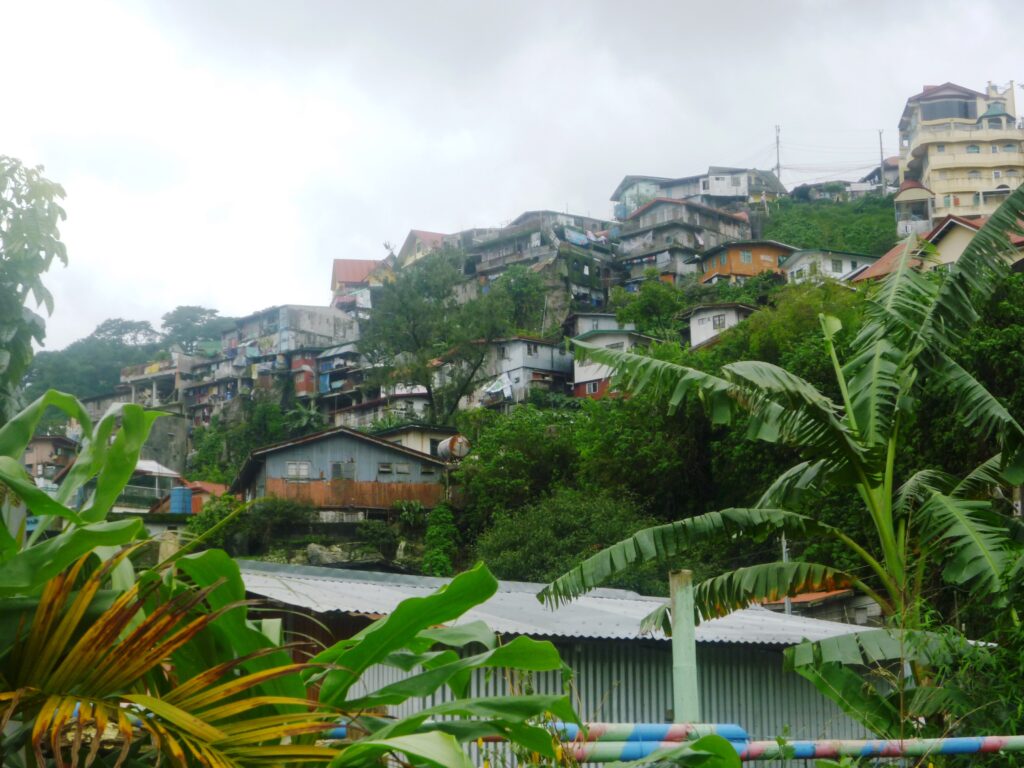
Baguio’s water security challenges
As a local resident and member of the Green Cities, Energy and Infrastructure (GCIEP) team supporting Baguio’s long-term water supply improvements, I see this issue from two perspectives. As a local, I must deal with the same interruptions and low water supply as my neighbours, and long for a more reliable supple. Through my work with GCIEP, which has allowed me to work with experts and government stakeholders, I understand how complex it is to build a water supply system that is reliable, fair and resilient.
Baguio experiences low and unpredictable supply of water due to tourism pressure, limited infrastructure and environmental factors. Baguio’s economy depends on visitors, but the city is unable to keep up with demand during peak season. Private operators or micro-water associations supply water to underserved parts of the city, but many areas still have limited capacity, and water quality remains unregulated.
The Baguio Water District also faces constraints. Due to leaks, pipe limitations and uneven distribution, some parts of the district receive a less consistent service. But the ultimate source of Baguio’s water security are the forests and watersheds that surround the city. The growing overextraction of ground water and urban sprawl, together with deforestation in the region, continue to undermine the long-term sustainability of Baguio’s water supply.
How GCIEP is contributing
There is never a single solution to development problems. Addressing the water security of Baguio is complex and requires a combination of technical, financial and social expertise. This is where the GCIEP contributes to meaningful change by connecting technical planning with institutional and community realities. For example, GCIEP is:
- Engaging communities and leaders in Baguio and neighbouring municipalities early to tackle the water security issue jointly. Conversations about water access and rights, environmental protection and shared benefits are crucial for long-term cooperation.
- Facilitating dialogue with representatives of indigenous communities to seek their meaningful participation in project design and the identification and mitigation of potential risks. These conversations will also ensure that their rights to ancestral lands, self-governance, social justice and cultural integrity are respected.
- Assessing the capacity and technical needs of the micro-water associations that currently provide water services to difficult-to-reach communities. Understanding their technical and financial needs can help strengthen these systems and potentially expand service coverage.
- Conducting affordability and price elasticity studies to understand whether higher water tariffs could support improved infrastructure while remaining affordable for residents.
- Exploring ways to reduce project costs and improve financial viability, while ensuring that Baguio’s long-term water supply is sustainably addressed.
Looking to the future
For residents, the future of water in Baguio is not just about better infrastructure – it’s about predictability and reliability. People want confidence that when they turn on the tap, water will flow consistently.
The next steps for GCIEP involve refining supply options, strengthening cooperation with neighbouring communities, and ensuring that environmental safeguards are integrated into plans. If done well, the result will not just be a more resilient system – it will bring peace of mind for families who have long learned to live around water uncertainty.
And for those of us who call Baguio home, that is a future worth working towards.
The UK’s Green Cities, Infrastructure and Energy Programme is tackling climate change and extreme poverty by accelerating the delivery of sustainable green cities and climate-resilient infrastructure.
Published
13/03/26