
- GCIEP’s Ethiopia interventions have focused on energy grid optimisation, advancing distributed renewable energy, supporting mini-bus drivers to transition to electric vehicles in Addis Ababa, developing a concept note to mobilise large scale climate finance from the Green Climate Fund towards electric mass transit, and prioritising bankable urban–regional investments along the Berbera corridor.
- GCIEP Ethiopia has convened a series of handover events across its interventions, to maximise the sustained uptake of GCIEP-supported reforms and infrastructure financing opportunities.
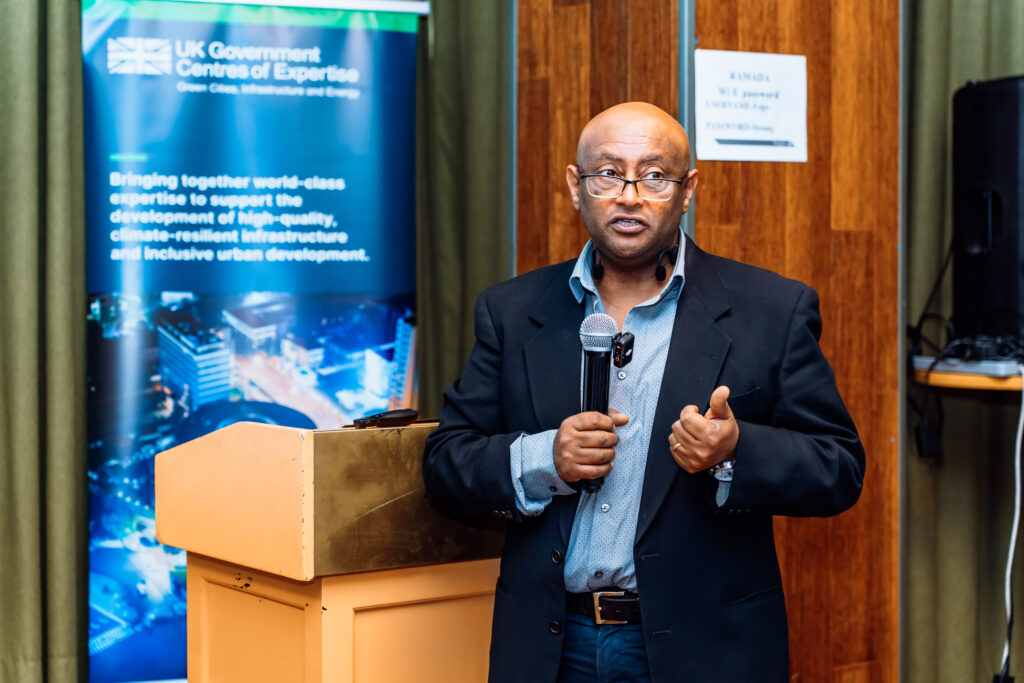
GCIEP convenes partner engagement event for the energy sector interventions
On 11 June 2026, the GCIEP Ethiopia team convened a multi-stakeholder handover meeting to present the technical assistance delivered under the Energy Intervention, share key achievements and lessons learned, and engage development partners on opportunities to support the continuation and implementation of priority initiatives beyond the GCIEP programme period.
GCIEP’s Ethiopia energy intervention has strengthened national capacity to modernise the grid and accelerate distributed renewable energy (DRE) deployment. Under the Smart Grid Optimisation (SGO) workstream, the programme validated Ethiopia’s need for a phased roadmap that “strengthens GIS as a digital backbone, integrates IT systems, builds human and institutional capacity”. It supported the Ethiopian Electric Utility (EEU) to refine its Enterprise GIS TOR, technically review Esri’s proposed solution, negotiate improved value for money, and deliver staff training. This contributed to EEU signing a contract with Esri and developing an enhanced GIS roadmap.
For the transmission‑line inspection support, GCIEP assessed EEP’s manual inspection practices, identified international best‑practice technologies, and prepared and budgeted full technical specifications for an unmanned aerial vehicle (UAV)-based inspection system, which Ethiopian Electric Power (EEP) has agreed to adopt. Under the Distributed Renewable Energy (DRE) the DRE workstream, delivered in collaboration with the Ministry of Water and Energy (MoWE), GCIEP developed a use case for micro‑ and small-enterprise electrification, produced a carbon market viability report, and expanded its evidence base through surveys of 473 MSEs, informing a national DRE roadmap for MoWE to take forward.
In another event, on 29 May, the GCIEP Ethiopia team facilitated an investment event to raise awareness of bankable investment project opportunities related to freight transit-oriented development (F/TOD) in the city of Dire Dawa. Co-hosts included the Ethiopian Railways Corporation (ERC), Dire Dawa Administration (DDA), Industrial Parks Development Corporation (IPDC), Ethio-Djibouti Railways (EDR), and the event was attended by logistics representatives and investors, alongside development partners including GIZ, AFD, the World Bank, EIB, the EU.
GCIEP’s Connected Secondary Cities intervention has strengthened the ability of secondary cities along the Berbera Corridor to identify, prepare and position bankable urban–regional investments. The programme completed a rapid diagnostic of secondary cities, producing a systems‑of‑cities framework that identified urban nodes along the corridor that can or should capture value and a participatory needs assessment. This work generated a long‑list and then shortlist of priority investments, leading to detailed freight transit-oriented development (F/TOD) opportunity scans covering demand, market positioning, risks, financial viability and potential funding sources.
Building on this, GCIEP prepared market sounding materials for three Dire Dawa projects, including development briefs, CAPEX/OPEX estimates, ESG considerations and investor‑facing documents, which provided the basis for the investor event. The event generated strong institutional commitment to move the projects forward, including readiness to negotiate with investors, refine financial structures, and update technical and cost assumptions where needed. GCIEP’s support has helped the Government of Ethiopia and related stakeholders to close in on financing vital F/TOD infrastructure that will help drive inclusive economic growth, job creation and climate resilience.
Finally, GCIEP has also convened a number of handover events related to its electric vehicle intervention. GCIEP’s electric‑mobility intervention in Ethiopia has strengthened the country’s transition toward a sustainable, climate‑resilient transport system by addressing both financing barriers and large‑scale investment mobilisation. The programme generated empirical evidence through a survey of 155 minibus taxi drivers, finding that 90% indicated willingness to transition to EVs if affordable financing is available, while identifying key barriers such as high loan repayments, collateral requirements and limited charging infrastructure. It also analysed structural constraints within local banks and developed eight financing building blocks, shortlisting a Long-Term Liquidity Facility and a credit‑risk Guarantee to de‑risk EV lending.
Most recently, GCIEP supported the Ministry of Finance to develop a Green Climate Fund (GCF) concept note for a US$185 million national EV charging infrastructure programme, including financial projections and a GIS-based midstream infrastructure plan. This work positions Ethiopia to mobilise large‑scale climate finance and operationalise its National Electric Vehicle Strategy. The programme also strengthened digital transport systems by updating Addis Ababa’s GTFS dataset, covering “184 bus and 385 minibus routes” and establishing long‑term data governance.
Well done to GCIEP’s incredible team in Ethiopia!
Published
21/06/26