
As climate risks intensify, ports are increasingly on the frontline of disruption. For the Port of Dar es Salaam – a critical gateway for Tanzania’s trade and wider regional economy – rising sea levels, flooding and sedimentation are no longer future threats but present challenges that demand immediate action.
Against this backdrop, a two-day dissemination and climate finance training workshop held on 23–24 March 2026 in Dar es Salaam marked an important step forward. Convened by the UK Government’s Green Cities, Infrastructure and Energy programme (GCIEP) in collaboration with the Tanzania Ports Authority (TPA), the workshop brought together key stakeholders to bridge the gap between technical analysis and practical implementation.
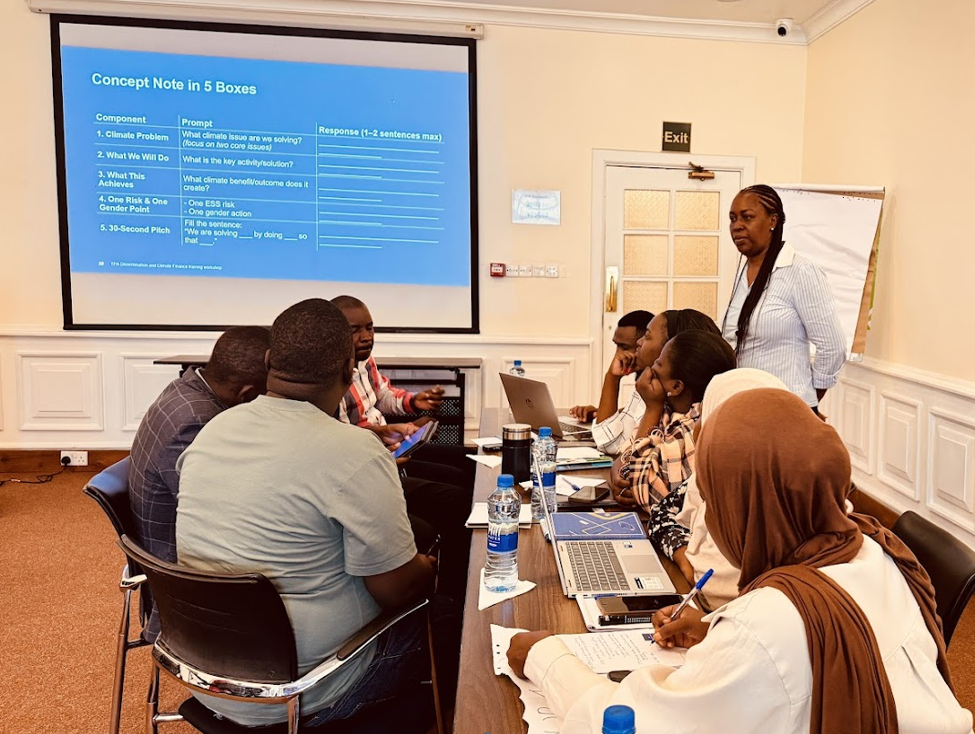
The two-day dissemination and climate finance training workshop on 23–24 March in Dar es Salaam.
Turning evidence into action
The workshop focused on two core objectives – sharing the findings of a detailed climate vulnerability and resilience assessment for the port, and building the capacity needed to access international climate finance.
Opening the session, Dr Madaka Tumbo, Team Lead for the Improving Climate Resilience of the Port of Dar es Salaam project, set the tone by emphasising that while robust technical assessments are essential, they must ultimately translate into funded, implementable projects. Representatives from TPA reinforced this message, highlighting the growing risks climate change poses to port operations and national competitiveness.
The dissemination of the assessment findings provided participants with a clearer understanding of the scale and nature of the risks facing the port. However, the central question remained: how can these insights be turned into investable projects capable of attracting financing at the scale required?
Navigating the climate finance landscape
The training sessions addressed this challenge directly, equipping participants with a practical understanding of climate finance structures and how they can be applied to port resilience.
Participants explored a range of financing instruments, from grants for early-stage technical work to concessional loans and blended finance models capable of mobilising private investment. Discussions highlighted the importance of aligning financing approaches with different stages of project development, as well as the conditions needed to attract private sector participation.
A key focus was the Green Climate Fund (GCF), one of the world’s largest sources of climate finance. Through interactive sessions, participants examined how proposals are assessed, including the importance of demonstrating a strong climate rationale and the potential to deliver transformational change beyond incremental improvements.
The six GCF investment criteria – ranging from impact potential to country ownership – were applied directly to the Port of Dar es Salaam context. This helped participants move beyond theory and begin to frame how a resilience project for the port could meet international funding requirements.
From strategy to concept note
On the second day, the focus shifted from understanding finance to applying it. Participants worked through the building blocks of a GCF concept note, including the theory of change and results framework that underpin successful proposals.
This process enabled stakeholders to connect climate risks – such as coastal flooding and sedimentation – with targeted interventions, expected outcomes and long-term impacts. It also highlighted the importance of structuring projects in a way that clearly demonstrates both climate benefits and broader development gains.
Critical cross-cutting issues were also addressed. Environmental and social safeguards were explored in detail, alongside gender considerations and stakeholder engagement requirements. Participants discussed how resilience interventions could affect local communities and how inclusive, gender-responsive approaches could strengthen both project design and outcomes.
Building practical skills through collaboration
A group exercise brought these elements together, challenging participants to develop a simplified concept note for the port. Working in teams, they identified key climate challenges, proposed solutions and articulated the expected benefits.
Notably, both groups converged on similar priorities – addressing flooding and sedimentation through infrastructure improvements and nature-based solutions such as mangrove restoration. This alignment reinforced the urgency and clarity of the risks facing the port, while also demonstrating a shared understanding of potential solutions.
The exercise also underscored the complexity of developing a full funding proposal, prompting discussions around timelines, institutional roles and the importance of continued collaboration. Particular attention was given to the role of Tanzania’s National Designated Authority in advancing proposals to the GCF, and the need to identify suitable implementing partners.
Sustaining momentum beyond the workshop
As the workshop concluded, participants reflected on the progress made – from understanding climate risks to beginning to shape fundable solutions. TPA reaffirmed its commitment to carrying this work forward, including advancing the development of a GCF concept note and embedding resilience considerations into planning and investment processes. The combination of robust technical evidence and strengthened institutional capacity provides a platform for continued progress.
Ultimately, the success of this effort will depend on what happens next – translating knowledge into action, securing financing and delivering the interventions needed to protect the port. If realised, this work will not only safeguard critical infrastructure but also strengthen trade, support economic resilience and improve livelihoods across Tanzania and the wider region.
The UK’s Green Cities, Infrastructure and Energy Programme is tackling climate change and extreme poverty by accelerating the delivery of sustainable green cities and climate-resilient infrastructure.
Published
09/04/26